
Our Location
Monday
8:00 am - 5:00 pm
Tuesday
7:00 am - 5:00 pm
Wednesday
10:00 am - 7:00 pm
Thursday
8:00 am - 5:00 pm
Friday
8:00 am - 5:00 pm
Saturday
9:00 am - 2:00 pm*
*2 times per month
*2 times per month


Missing teeth change more than the appearance of your smile — they can alter how you speak, what you eat, and how your jaw ages over time. Dental implants are engineered to replace missing teeth in a way that restores both function and confidence. They act as a foundation for natural-looking crowns, bridges, or dentures and are designed to integrate with your jaw so the replacement behaves much like a natural tooth.
An implant-supported restoration is often recommended when a stable, long-term solution is desired. Because the implant anchors into the bone, it provides support for chewing forces and does not rely on neighboring teeth for stability. For many patients this means being able to enjoy a wider variety of foods, speak clearly, and smile without worrying about slippage or looseness.
Our approach emphasizes careful assessment and individualized planning. At Chadha & Co Dental we combine modern imaging and planning tools with conservative treatment planning to help patients achieve predictable outcomes and comfortable prosthetic solutions that suit their lifestyle and goals.
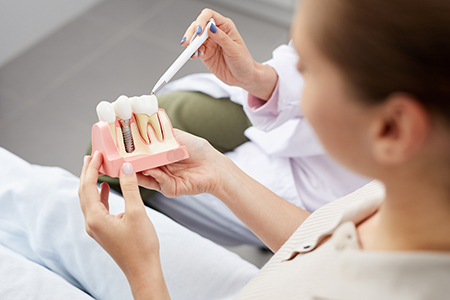
Implants replace the entire tooth structure, not just the visible crown. The titanium post that serves as the implant becomes integrated with the jawbone through a process called osseointegration. Once stable, the implant transmits chewing forces into the bone much like a natural root, which preserves jaw health and allows the overlying restoration to function naturally.
Because the connection to the bone is secure, implant restorations don’t move the way removable dentures can. That predictability improves comfort and confidence when speaking, eating, and laughing in social settings. Many patients describe the restored tooth as feeling and acting like the original.
Modern restorative materials also play a role in the natural result. Ceramic crowns and carefully contoured prostheses are shade-matched and shaped to blend with the surrounding teeth and soft tissues, creating an aesthetic outcome that’s in harmony with your face.
The strength of an implant-supported restoration comes from proper integration with healthy bone. When a tooth is lost, the underlying bone no longer receives normal stimulation and can begin to resorb. An implant restores that stimulus, which helps maintain bone volume and facial contours over time.
This preservation of bone is more than cosmetic — it supports neighboring teeth, maintains proper bite alignment, and helps prevent the gradual changes in facial structure that can occur after tooth loss. In many cases, protecting bone with implants reduces the need for extensive reconstructive work later on.
Good implant outcomes depend on sound planning, precise surgical technique, and ongoing oral hygiene. Regular follow-up and routine dental care help ensure the implant and the prosthetic components remain healthy for many years.
Dental implants combine functional performance with aesthetic benefit. They restore biting efficiency so patients can enjoy a fuller diet, and they support clear speech by maintaining proper oral mechanics. Because implants are fixed in place, they eliminate the movement and irritation that can come with removable options.
From a long-term perspective, implants reduce the risk of neighboring teeth shifting into empty spaces and help preserve overall oral health. The stability they provide can improve confidence and comfort in daily life, whether you’re eating with family or speaking at work.
Implants are also versatile: they can support single crowns, multi-tooth bridges, or entire arches of teeth. Treatment plans are tailored to each individual, and modern techniques mean many patients enjoy efficient care and predictable prosthetic outcomes.
Most adults in generally good health are potential candidates for implants, but candidacy depends on several factors: the amount and quality of jawbone, gum health, medical history, and personal goals. A careful exam and imaging allow the dental team to evaluate these variables and outline sensible options.
Smoking, certain medical conditions, and uncontrolled periodontal disease can affect implant success; addressing these factors before treatment can improve outcomes. Our team focuses on assessing and optimizing overall oral health so implants have the best possible environment to succeed.
Clear communication is central to planning. We discuss expected timelines, surgical steps, and restorative choices so you understand how each decision supports function, aesthetics, and long-term maintenance.
Placement of an implant is typically performed as outpatient surgery under local anesthesia, and sedation options are available for patient comfort. The surgical visit involves placing the implant into the prepared site and, when appropriate, protecting it with a healing cap or a temporary prosthesis.
After placement, the body gradually integrates the implant with the bone over weeks to months. This healing phase—osseointegration—creates the stable foundation necessary for a final crown, bridge, or denture. Depending on your case, you may receive a provisional restoration that maintains appearance and function while integration occurs.
Follow-up visits during healing ensure tissue health and proper progress. Once integration is confirmed, the restorative phase begins with impressions, careful shade and form selection, and delivery of the final prosthesis tailored for comfort and natural aesthetics.
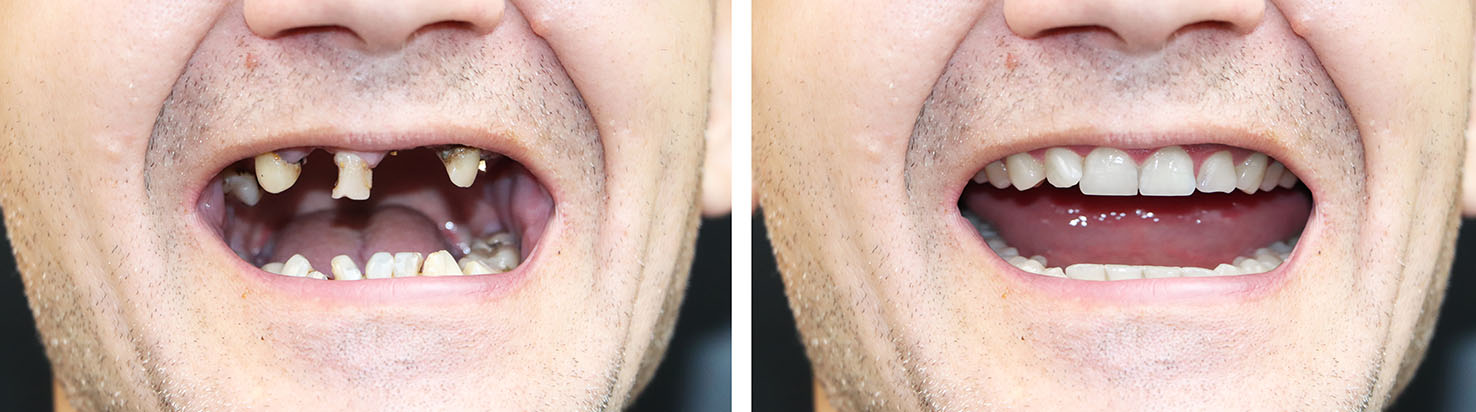
Successful implants require adequate bone volume. If bone has been lost after tooth extraction, infection, or years of missing teeth, bone grafting can rebuild the foundation needed for stable implants. Grafting materials and techniques vary, and your clinician will recommend the most appropriate option based on the situation.
Bone grafting may be performed at the time of extraction, prior to implant placement, or simultaneously with implant surgery depending on the clinical circumstances. With modern grafting methods, predictable augmentation often makes implant therapy possible for patients who might once have been considered poor candidates.
Because grafting and implant timing affect the overall treatment schedule, early planning and thorough imaging give patients a clear picture of the steps involved and the anticipated healing timeline.
Implant dentistry brings together surgical precision and prosthetic artistry. Choosing a dental team with experience in both aspects improves the likelihood of a natural-looking, functional result. From digital diagnostics to careful impression work and precise crown fabrication, attention to detail at every stage matters.
Chadha & Co Dental takes a patient-centered approach: we listen to your priorities, explain options in straightforward terms, and coordinate care so that surgical and restorative phases align smoothly. Our goal is to deliver durable restorations that fit your life and support long-term oral health.
To learn more about how dental implants can restore comfort, function, and confidence, please contact us for more information.


If you've lost a tooth due to injury, decay, gum disease, or any other reason, we recommend dental implants to replace missing teeth. Dental implants come the closest to replicating the look, feel, and function of your natural teeth.
Dental implants are placed into the jawbone and mirror the same function as the root of a tooth. The procedure for dental implants is usually performed while a patient is sedated. Patients who undergo IV sedation must have an empty stomach and transportation home following the procedure. Most sedation patients will have little to no memory of the procedure occurring.
Generally, dental implants are made out of a biocompatible metal such as titanium. Biocompatible metals are also used for other common bone implants (such as shoulder, hip, and knee replacements). The visible portion of the implant is usually made out of porcelain and is custom-made to match your existing teeth.
Dental implants are designed to fuse to the bone, which makes them become permanent fixtures. Typically speaking, the success rate is nearly 100%. There are few cases in which the implant will not fuse as intended and must be removed. If this happens to occur, the procedure can be attempted again a few months later.
Dental implants are not usually covered by dental insurance, but may be covered under a patient's medical insurance. Our office and your insurance company can discuss coverage options with you based on your individual case and treatment plan.
It's easy... just take care of an implant as if it's a natural tooth! This involves regular brushing, flossing, and dental checkups. If you have any concerns about your implant, contact us immediately.
Dental implants are biocompatible posts, typically made of titanium or similar materials, that are surgically placed into the jaw to replace the root portion of a missing tooth. A prosthetic restoration such as a crown, bridge, or denture is then attached to the implant to restore the visible tooth structure and chewing function. Because implants replace the entire tooth architecture rather than only the crown, they provide a stable foundation for everyday use and help preserve natural oral mechanics.
After placement the implant integrates with the surrounding bone through a process called osseointegration, which creates a secure connection that transmits normal chewing forces into the jaw. This integration helps maintain bone volume and supports the soft tissues, resulting in an outcome that can feel and perform similarly to a natural tooth. Modern restorative materials and shade-matching techniques make the final prosthesis blend with adjacent teeth for an aesthetic result.
Most healthy adults with sufficient jawbone and good periodontal health are potential candidates for dental implants, but each case requires a careful clinical assessment. Factors that influence candidacy include the amount and quality of bone at the planned site, the health of the gums, systemic medical conditions, and habits such as smoking. A comprehensive exam with digital imaging helps the dental team evaluate these variables and recommend the safest, most predictable path forward.
Certain medical conditions and uncontrolled periodontal disease may require management before implant surgery to improve the chance of long-term success. Lifestyle factors such as tobacco use and uncontrolled diabetes can increase complication risk, and addressing these issues ahead of treatment improves outcomes. The treatment plan is individualized so that implants are offered when the biological environment is optimized for integration and healing.
Implant placement is typically an outpatient procedure performed under local anesthesia, and sedation options are available for additional comfort when needed. During the surgical visit the implant is positioned in the prepared site and may be covered with a healing cap or fitted with a temporary restoration depending on the case and primary stability. Surgical technique and precise three-dimensional placement are important to protect adjacent structures and to create the best conditions for later prosthetic work.
Following placement the body requires time to integrate the implant with the bone, a process that commonly takes several weeks to a few months depending on individual healing. Routine follow-up visits monitor tissue health and integration progress, and once the implant is stable the restorative phase begins with impressions or digital scans and fabrication of the final prosthesis. Careful coordination between surgical and restorative phases helps deliver predictable function and appearance.
One of the key benefits of dental implants is their ability to preserve jawbone by restoring the stimulus that a natural tooth root provides, which helps maintain bone volume and facial contours over time. By preventing bone resorption, implants support the stability of neighboring teeth and help maintain proper bite relationships, reducing the likelihood of drift and occlusal imbalance. This structural preservation can also lessen the chance of needing more extensive reconstructive procedures later in life.
Beyond bone health, implant restorations restore efficient chewing and clear speech, which contributes to overall oral function and patient confidence. With appropriate hygiene and routine dental care, implant-supported restorations can remain healthy for many years, making them a durable option for replacing single teeth, multiple teeth, or full arches. Ongoing maintenance and periodic professional evaluation are essential to identify and manage potential issues early.
Implant therapy can be tailored to a variety of needs, from replacing a single missing tooth with one implant and a crown to restoring multiple teeth with implant-supported bridges. For patients missing an entire arch, strategically placed implants can support a fixed full-arch prosthesis that functions much like natural teeth, while implant-retained overdentures provide increased retention and comfort for those who prefer a removable option. The versatility of implants allows clinicians to select solutions that best match the patient’s functional requirements and aesthetic goals.
Treatment selection depends on factors such as the number of missing teeth, bone availability, patient preferences, and long-term maintenance considerations. Detailed planning with digital imaging and sometimes dental models ensures the chosen option will provide proper support, occlusion, and esthetics. Chadha & Co Dental customizes each plan to balance durability, appearance, and the patient’s lifestyle.
Bone grafting is considered when the jaw lacks adequate volume or density to support an implant safely and predictably, which can occur after long-standing tooth loss, infection, or trauma. Grafting materials range from the patient’s own bone to processed allografts and xenografts, and the chosen material and technique depend on the degree of deficiency and the clinical goals. In many cases grafting can be performed at the time of extraction, before implant placement, or concurrently with implant surgery to rebuild the foundation.
Sinus augmentation is a specialized grafting procedure used in the upper posterior jaw when the sinus floor is too close to the planned implant site. With careful planning and modern techniques, sinus lifts and grafts can create sufficient vertical height to allow stable implant placement. These procedures typically require additional healing time, and the dental team will explain the expected timeline and follow-up needed to ensure predictable results.
Once the implant has integrated, the restorative phase begins with impressions or digital scans to capture the exact position of the implant and the surrounding soft tissues. The dental team will select appropriate abutments and design the crown, bridge, or denture to achieve proper occlusion, emergence profile, and shade match with adjacent teeth. Careful laboratory communication and trial fittings ensure the prosthesis supports comfortable function and a natural appearance.
At final delivery the restoration is secured and minor adjustments are made to achieve balanced bite forces and comfortable chewing. The clinician will review home-care instructions and schedule follow-up appointments to monitor the implant and prosthetic components. With attentive care, the restoration should provide long-term performance and blend seamlessly with the rest of the smile.
Maintaining dental implants requires the same daily attention as natural teeth: thorough brushing twice a day and cleaning between teeth with floss, interdental brushes, or other recommended tools. Patients should use techniques that clean around implant abutments and under prostheses effectively, and the dental team can recommend specific products and methods based on the restoration type. Avoiding hard or excessively sticky foods and refraining from using teeth as tools helps protect both implants and restorations.
Regular professional care is also critical; routine examinations and cleanings allow clinicians to check the health of peri-implant tissues, assess occlusion, and inspect prosthetic components for wear. Patients with bruxism, periodontal history, or other risk factors may be advised to use a night guard or undergo more frequent monitoring. Consistent hygiene and timely maintenance are key to preserving implant health for many years.
Dental implants are a well-established and generally safe treatment with high long-term success rates when placed and restored correctly, but like all surgical procedures they carry some risks. Possible complications include infection at the surgical site, inadequate integration (failure to osseointegrate), sinus or nerve involvement in rare cases, and mechanical issues with the prosthetic components. Many of these risks can be minimized through careful planning, sterile technique, and managing underlying health or lifestyle factors that affect healing.
If a complication does occur, there are established protocols for diagnosis and management, which may include antibiotics, local care, revision surgery, or replacement of prosthetic parts. Selection of an experienced surgical and restorative team and adherence to follow-up recommendations significantly reduce the likelihood of serious problems. Open communication with your clinician about medical history, medications, and habits helps create the safest treatment pathway.
Determining whether an implant is the best option begins with a comprehensive evaluation that includes a dental exam, periodontal assessment, and digital imaging to review bone volume and anatomical considerations. The office of Chadha & Co Dental will discuss your functional needs, aesthetic goals, and any medical factors that influence treatment choices to create a tailored plan. A thorough consultation helps set realistic expectations and outlines the sequence of care, including any preparatory procedures that may be needed.
If implants are recommended, the team will explain surgical and restorative steps, likely timelines, and the follow-up required to support long-term success. Patients are encouraged to ask questions about alternatives and to review the merits of single-tooth, multiple-tooth, or full-arch solutions in the context of their overall oral health. Beginning with careful diagnosis and personalized planning ensures the selected approach aligns with both short-term needs and long-term oral wellness at our North Bethesda office.

Ready to schedule your next dental appointment or have questions about our services?
Contacting Chadha & Co Dental is easy! Our friendly staff is available to assist you with scheduling appointments, answering inquiries about treatment options, and addressing any concerns you may have. Whether you prefer to give us a call, send us an email, or fill out our convenient online contact form, we're here to help. Don't wait to take the first step towards achieving the smile of your dreams – reach out to us today and discover the difference personalized dental care can make.

Back to top