
Our Location
Monday
8:00 am - 5:00 pm
Tuesday
7:00 am - 5:00 pm
Wednesday
10:00 am - 7:00 pm
Thursday
8:00 am - 5:00 pm
Friday
8:00 am - 5:00 pm
Saturday
9:00 am - 2:00 pm*
*2 times per month
*2 times per month


Laser dentistry uses focused light energy to perform a range of dental treatments with precision and control. Rather than relying solely on traditional rotary instruments or scalpels, dental lasers allow clinicians to target tissues at a microscopic level. This capability makes lasers a versatile tool for both soft-tissue procedures—like gum contouring and lesion removal—and certain hard-tissue applications, such as conservative decay removal and activating whitening systems.
Because lasers operate differently than mechanical instruments, they can change how some treatments feel and heal. Patients frequently notice less vibration and a quieter treatment environment, and clinicians can often preserve more healthy structure when addressing decay or reshaping tissue. While laser therapy is not a replacement for every instrument in the operatory, it is a valuable option that expands the treatment choices available for patients.
Advances in laser technology over the past two decades have refined safety protocols, improved ergonomic design, and broadened clinical indications. Different wavelengths and delivery systems are selected based on the tissue type and clinical goal, enabling care that’s tailored to the patient’s specific needs. As a result, laser dentistry has moved from a niche specialty into mainstream practice in many modern dental offices.
At its core, a dental laser converts electrical energy into a concentrated beam of light that interacts with target tissues. Depending on the wavelength, that light is selectively absorbed by water, hemoglobin, or pigment in the tooth or gum. That selective absorption is what allows lasers to cut, ablate, coagulate, or sterilize with minimal impact on surrounding healthy tissue.
Unlike mechanical drills that remove bulk material by contact, many lasers remove tissue by exciting microscopic water molecules and vaporizing the targeted area. This contactless mechanism reduces heat transfer, vibration, and pressure—factors that commonly cause discomfort during traditional procedures. For appropriate cases, the result is gentler treatment and a reduced need for local anesthesia.
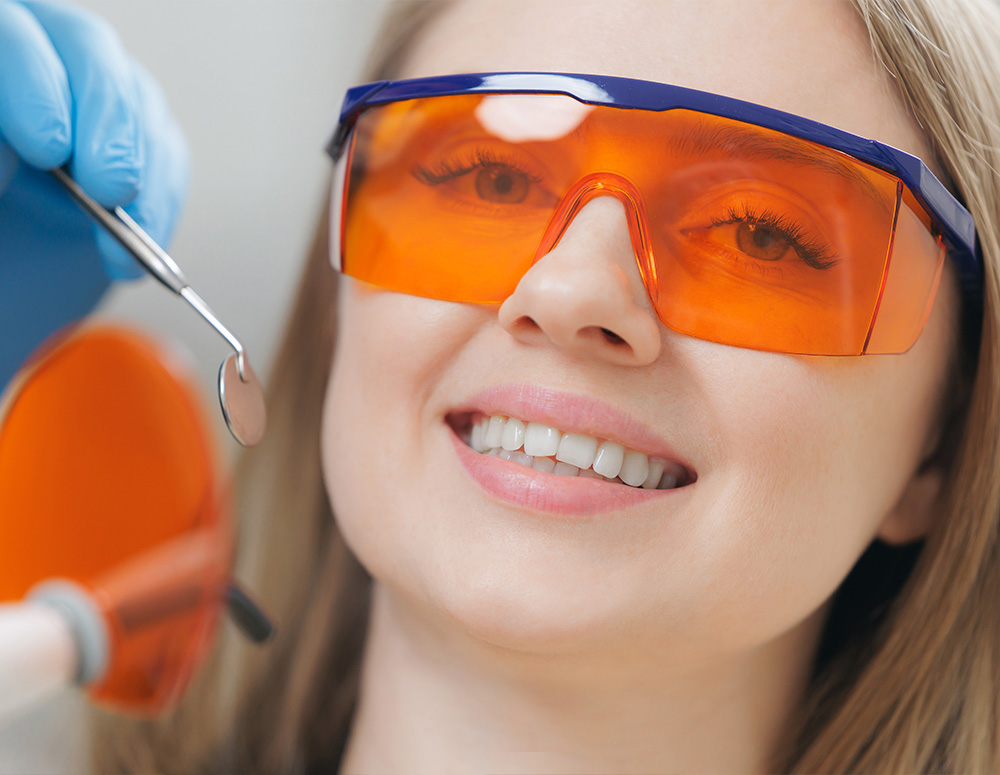
Clinicians follow strict safety standards when using lasers, including protective eyewear and calibrated settings for each procedure. The power, duration, and frequency of the laser are adjusted to match the treatment objective so the beam achieves the desired tissue effect while minimizing collateral damage. This level of control is one reason lasers are valued in both soft- and hard-tissue dentistry.
Dental lasers are employed across a wide range of applications. In soft-tissue dentistry, they are frequently used for gingival sculpting, frenectomies, removal of benign oral lesions, and periodontal pocket decontamination. The laser’s ability to cut and simultaneously coagulate reduces bleeding during and after surgery, which can simplify treatment for both clinician and patient.
In restorative and preventive care, certain lasers help remove decayed tissue with greater conservation of the surrounding tooth structure. They can also be used to prepare small areas for restorations and to cure or activate specific in-office whitening systems. Additionally, lasers assist in oral diagnostics and in procedures such as tissue biopsies by providing clean margins and reducing tissue trauma.
For periodontal treatment, lasers can help reduce bacterial load and promote a healthier soft-tissue environment when used alongside conventional therapy. That said, not every periodontal condition is best treated with laser alone; it is most effective when integrated into a broader treatment plan that may include scaling, root planing, and ongoing maintenance.
One of the most noticeable differences patients report is improved comfort during procedures that involve lasers. Because lasers often minimize vibration and lower the need for deep anesthesia, many patients find treatments less stressful. The reduced bleeding and swelling associated with laser procedures can also translate into a smoother, faster recovery period for many soft-tissue surgeries.
Healing after laser treatment tends to be favorable because the laser’s coagulative action seals capillaries and nerves at the treatment site, which can reduce postoperative sensitivity. In soft-tissue cases, precise incision lines and a sterilized wound environment contribute to predictable healing and often less scarring. Nonetheless, individual healing varies depending on overall health, oral hygiene, and the extent of the procedure.
Safety remains paramount: clinicians select laser settings and techniques based on the patient’s medical history, the specific clinical objective, and established guidelines. While lasers offer many benefits, they are not universally indicated for every patient or every procedure. An informed consultation helps set expectations and clarifies what outcomes are realistic for the individual.
Deciding whether laser dentistry is appropriate begins with a comprehensive evaluation. Your dental provider will review medical and dental history, perform a focused oral exam, and use diagnostic imaging as needed to determine whether a laser-based approach is suitable. This assessment ensures that the chosen modality aligns with the clinical goals while minimizing risk.
When lasers are part of the proposed plan, clinicians explain the intended benefits, any limitations, and what to expect during recovery. For some treatments, lasers may reduce the need for sutures or local anesthesia; for others, they may be an adjunct to traditional techniques rather than a replacement. Treatment decisions are driven by evidence-based practice and the goal of preserving long-term oral health.
At the office of Chadha & Co Dental, we integrate laser options into individualized care pathways when they offer clear advantages. Our emphasis is on transparent communication and conservative decision-making—choosing the least invasive, most effective approach for each patient. If laser therapy is recommended, it is presented as one component of a carefully considered treatment plan.
In summary, laser dentistry offers a modern set of tools that can increase precision, improve patient comfort, and reduce postoperative effects for many procedures. It is not a universal solution, but when applied appropriately it expands the clinician’s ability to deliver conservative, effective care. If you would like to learn whether laser dentistry may be right for your needs, please contact us for more information.

Laser dentistry uses focused light energy to interact with oral tissues in a controlled way, allowing clinicians to cut, ablate, coagulate or disinfect without direct mechanical contact. Different wavelengths target specific components such as water, hemoglobin or dental pigments, which determines whether the laser is best suited for soft-tissue or certain hard-tissue applications. Because the light is absorbed selectively, lasers can deliver precise treatment while minimizing impact on surrounding healthy tissue.
The device converts electrical energy into a narrow beam that is delivered through a fiber or handpiece and adjusted for power, duration and pulse frequency to match the clinical objective. This selective absorption and noncontact mechanism often reduces vibration and pressure compared with rotary instruments, which can improve patient comfort during appropriate procedures. Clinicians follow established safety protocols, including protective eyewear and calibrated settings, to achieve predictable outcomes.
Lasers are widely used in soft-tissue procedures like gingival contouring, frenectomies, removal of benign lesions and periodontal pocket decontamination because they can cut and coagulate simultaneously, reducing bleeding. In restorative and preventive care some lasers help remove small areas of decay conservatively, prepare tooth surfaces for restoration and activate certain in-office whitening systems. They also assist in diagnostics and biopsies by providing clean margins and reduced tissue trauma.
For periodontal therapy, lasers can reduce bacterial load and complement scaling and root planing, though they are rarely the sole treatment for advanced disease. Their coagulative and sterilizing properties often produce a cleaner surgical field and may simplify postoperative care for many soft-tissue cases. That said, clinicians determine the role of lasers on a case-by-case basis depending on overall treatment goals.
Many patients report less vibration, noise and perceived pressure during laser procedures compared with high-speed rotary instruments, which can make treatments feel more comfortable. Because some lasers remove tissue via a contactless mechanism and produce less heat transfer, clinicians sometimes can reduce the depth of anesthesia or avoid it for minor soft-tissue work. The simultaneous coagulation provided by lasers also tends to limit bleeding and swelling, which can contribute to a smoother recovery.
Comfort varies with the specific procedure, the laser type and individual sensitivity, so anesthesia decisions are personalized based on the clinical situation. Providers will discuss anesthetic options and expected sensations before treatment to set realistic expectations. Safety protocols and calibrated settings further help minimize discomfort and improve the overall patient experience.
Healing after laser treatment often appears favorable because the beam’s coagulative action seals small blood vessels and nerve endings, which can reduce postoperative bleeding and sensitivity. The sterilizing effect of some lasers may lower bacterial contamination at the incision site, contributing to predictable healing and sometimes less scarring in soft-tissue procedures. Patients commonly experience reduced swelling and a quicker return to normal function following minor laser surgeries.
Individual healing depends on general health, oral hygiene and the extent of the procedure, so outcomes vary across patients. Clinicians provide specific postoperative instructions—such as oral hygiene guidance and activity restrictions—tailored to the treatment performed. Follow-up visits ensure proper tissue response and allow the team to address any concerns promptly.
Good candidates are patients whose clinical needs align with the strengths of laser therapy—for example, those requiring precise soft-tissue management, conservative decay removal or adjunctive periodontal care. Patients with certain medical conditions, photosensitive medications or implantable electronic devices may require special consideration, and some lasers are not appropriate for all tissue types or treatment goals. A comprehensive medical and dental history helps clinicians determine whether laser therapy is suitable for an individual.
Pregnancy, uncontrolled systemic conditions or specific medication interactions can influence candidacy, so full disclosure of health information is essential. When lasers are not indicated as a primary modality, they may still be used as adjuncts to traditional treatments to improve outcomes. The decision to use a laser is always guided by clinical evidence and the goal of preserving long-term oral health.
Strict safety protocols are followed whenever lasers are used, including the use of wavelength-appropriate protective eyewear for the patient and the clinical team. Clinicians calibrate power, pulse duration and delivery mode to the specific procedure and tissue type, and they maintain controlled treatment fields to prevent stray reflections or unintended exposure. Many offices also post warning signs and use barriers to restrict access to the operatory during active laser use.
Proper training and certification in laser safety and clinical application are essential for providers to deliver predictable, low-risk care. Equipment maintenance and adherence to manufacturer guidelines further reduce the risk of malfunction or suboptimal performance. Patients should feel free to ask their provider about the team’s training and the safety measures in place before undergoing laser therapy.
Lasers are often integrated into a broader, evidence-based treatment plan rather than used as a standalone solution for every condition. For example, periodontal therapy may combine scaling and root planing with laser-assisted decontamination, while restorative care might use a laser to conservatively remove decay before placing a composite restoration. In cosmetic workflows, lasers can be combined with whitening protocols or tissue recontouring to optimize esthetic results.
Clinical decisions prioritize the least invasive and most effective approach for long-term oral health, and lasers are chosen when they add clear value to outcomes or patient comfort. Providers explain how laser therapy complements other modalities and why a combined approach may be recommended. This collaborative planning ensures that each tool serves a defined role in achieving treatment goals.
Lasers can be a useful option for children in specific situations, such as frenectomies or removal of small lesions, because they sometimes reduce bleeding and accelerate recovery. However, treatment decisions for pediatric patients take behavioral considerations, developmental anatomy and anesthesia needs into account, and not all procedures are appropriate for a young child. Clinicians discuss benefits and alternatives with parents or guardians to choose the safest, most effective approach.
For pregnant patients, the standard practice is to limit elective procedures and modify treatment plans to prioritize safety during gestation, especially in the first trimester. If a laser procedure is considered necessary, the dental team coordinates with the patient’s medical providers and follows conservative protocols to minimize any potential risk. Thorough communication about health status and medications informs whether laser therapy is recommended during pregnancy.
Selection of a laser system is driven by the clinical indication, the target tissue and the desired tissue interaction—different wavelengths are absorbed preferentially by water, hemoglobin or hydroxyapatite. Soft-tissue lasers operate at wavelengths optimized for cutting and coagulating gingiva, while other lasers are designed for selective hard-tissue interaction or bacterial reduction. The delivery system, pulse parameters and fiber optics are also matched to procedural requirements for precision and safety.
Clinicians rely on evidence-based guidance, manufacturer specifications and hands-on training to choose settings that achieve the intended biological effect with a margin of safety. Maintenance, calibration and familiarity with the device are equally important to ensure consistent clinical performance. When multiple approaches are viable, the team discusses the rationale with the patient so expectations are clear.
A typical consultation begins with a review of your medical and dental history, a focused oral exam and any necessary imaging to determine whether laser therapy fits your treatment goals. The clinician explains the proposed use of the laser, how it compares with alternative techniques, potential benefits and any limitations or risks specific to your case. This conversation helps set realistic expectations about sensations during the procedure and the recovery timeline.
If laser therapy is recommended, the team outlines the steps of the appointment, anesthesia options and postoperative instructions so you know what to expect from start to finish. You are encouraged to ask questions about training, safety protocols and follow-up care to ensure confidence in the proposed plan. At Chadha & Co Dental we prioritize clear communication and conservative decision-making when discussing laser options.
Ready to schedule your next dental appointment or have questions about our services?
Contacting Chadha & Co Dental is easy! Our friendly staff is available to assist you with scheduling appointments, answering inquiries about treatment options, and addressing any concerns you may have. Whether you prefer to give us a call, send us an email, or fill out our convenient online contact form, we're here to help. Don't wait to take the first step towards achieving the smile of your dreams – reach out to us today and discover the difference personalized dental care can make.

Back to top