
Our Location
Monday
8:00 am - 5:00 pm
Tuesday
7:00 am - 5:00 pm
Wednesday
10:00 am - 7:00 pm
Thursday
8:00 am - 5:00 pm
Friday
8:00 am - 5:00 pm
Saturday
9:00 am - 2:00 pm*
*2 times per month
*2 times per month


A brighter smile often feels like a small change with big results — it can lift your confidence, refresh your appearance, and make everyday interactions more comfortable. At Chadha & Co Dental, we combine careful clinical assessment with cosmetic expertise to help patients achieve a natural, long-lasting improvement in tooth color. Our approach favors predictable results and patient comfort over quick fixes.
If your teeth look dull, yellowed, or spotted, modern whitening options can deliver noticeable improvements in a relatively short time. Rather than offering a one-size-fits-all solution, we evaluate the cause of discoloration and recommend a plan that balances safety, effectiveness, and your lifestyle. Many patients find that professionally supervised whitening produces the clean, bright look they want without compromising oral health.
Throughout this page you’ll find clear explanations of how whitening works, what influences tooth color, and what to expect before, during, and after treatment. This information is intended to help you make an informed decision and set realistic expectations for your smile transformation.
Successful whitening begins with a thorough dental exam. Stains can have different origins — some sit on the enamel surface and respond quickly to bleaching, while others come from within the tooth and may require alternative treatments. A careful clinical evaluation lets us identify cavities, sensitive areas, or existing restorations that could affect results or cause discomfort during treatment.
Based on that exam we recommend either an in-office procedure, a take-home system, or a combination of both. In-office treatments are ideal for patients seeking immediate, dramatic change under professional supervision. Customized take-home trays are convenient for slow, controlled whitening at home and are useful for follow-up touch-ups to preserve results.
Every plan is tailored to the patient’s goals, oral health status, and daily routine. We discuss the expected degree of shade change, possible sensitivity, and the timeline for touch-ups so you know what to expect and how to protect your investment in a brighter smile.
Tooth color is governed by several factors, including the thickness and translucency of enamel and the color of the underlying dentin. Over time, enamel naturally thins and reveals more of the dentin’s yellowish tone. Lifestyle choices — such as regular coffee, tea, red wine, or tobacco use — add external stains to enamel surfaces, while some medications, injuries, and developmental factors can cause discoloration from within the tooth.
Because of these differences, not all discoloration responds the same way to whitening. Surface stains from foods and drinks tend to lift more predictably, whereas intrinsic staining — for example from certain antibiotics taken during tooth development or from dental trauma — may require longer or alternative cosmetic solutions to reach the desired result.
Understanding the type and depth of staining helps set realistic expectations and guides the selection of the safest, most effective whitening approach. When necessary, we’ll discuss complementary cosmetic options that blend function and aesthetics for a uniform appearance.
There are countless products marketed for whitening, from toothpastes and strips to generic tray kits. Many can deliver modest surface improvement, but they vary widely in effectiveness and safety. Professional-grade systems used by dental clinicians are stronger and applied under supervision, which maximizes results while minimizing the risk of harm to the gums and tooth structure.
Custom trays and dentist-dispensed gels provide controlled contact between the bleaching agent and tooth surfaces, reducing the chance of oral irritation and ensuring a more even outcome. In-office options offer higher-concentration formulations for faster lightening, while take-home regimens let patients progress at a steadier pace with products fitted to their mouth.
Weighing convenience against predictability is important. Our team will explain the advantages and limitations of each option so you can choose the method that best fits your goals and tolerance for sensitivity.
Most dentist-supervised whitening relies on peroxide-based agents that penetrate enamel to break down chromogenic molecules responsible for discoloration. This oxidation process alters the appearance of stains, making teeth look lighter. The active ingredients commonly used are formulated at concentrations that balance effectiveness with safety when used under professional direction.
During an in-office visit, the gums are protected and the whitening gel is applied in measured doses for one or more cycles until the desired shade is approached. For take-home therapy, you’ll receive custom trays and instructions for nightly or twice-daily wear; progress is monitored at follow-up visits so adjustments can be made if sensitivity occurs.
Patients sometimes notice transient sensitivity after treatment as the teeth adjust. This is typically temporary and manageable with desensitizing toothpaste or brief pauses in the regimen. We provide clear guidance on symptom control and signs that warrant a return visit.
Whitening improves the color of natural teeth but does not change the shade of restorations such as crowns, veneers, or composite fillings. If you have visible restorations, a coordinated plan that addresses both natural teeth and prosthetic material may be necessary to achieve a balanced cosmetic result.
Certain dental conditions — for example, untreated gum disease, extensive decay, severe enamel wear, or active tooth sensitivity — should be addressed before whitening is started. In some cases, alternative cosmetic options like porcelain veneers or bonded restorations provide a more predictable aesthetic outcome than bleaching alone.
Our recommendations aim to prioritize oral health and long-term results. When whitening is appropriate, we proceed with steps to protect the teeth and gums; if another treatment better serves your goals, we explain why and outline the next steps.
Keeping a newly brightened smile looking fresh is largely about daily habits. For the first 48 hours after an intensive in-office treatment, the tooth surface can be more susceptible to staining, so avoiding strongly colored foods and beverages helps the enamel reestablish its protective surface. Over the longer term, moderate consumption of staining substances and good oral hygiene reduce the frequency of touch-ups.
Smoking accelerates discoloration and undermines whitening results, so cutting back or quitting supports both cosmetic and overall health. When sensitivity occurs, desensitizing toothpastes, shorter application times, or interval adjustments often provide relief while maintaining progress toward your aesthetic goal.
Periodic maintenance with a take-home kit or occasional in-office touch-ups keeps the smile vibrant without repeating the entire initial protocol. During routine checkups we’ll monitor shade stability, examine restorations, and recommend the safest maintenance schedule for your lifestyle.
In summary, professionally supervised teeth whitening offers a reliable way to brighten natural teeth when guided by a careful dental evaluation. If you’d like to learn whether whitening is a good match for your smile, please contact us for more information and to schedule an evaluation.

While an overwhelming selection of over-the-counter teeth whitening products is readily available for purchase at stores or online, it's imperative to keep in mind that the healthiest and most effective methods of care are those professionally supervised by your dentist. With a teeth whitening procedure provided by our office, we can safely, comfortably, and effectively transform your smile by up to several shades in a short amount of time.
Teeth whitening offers a simple and non-invasive way to whiten and brighten your smile. Whitening products contain various strengths of biologically safe hydrogen peroxide or carbamide peroxide that act as bleaching agents on stained or discolored dental enamel. By breaking the stains into smaller pieces, these bleaching agents make the color less concentrated and your teeth brighter.
Every patient is different, and despite the fact that many people experience no sensitivity or pain with a professional teeth whitening, there are some that do. Although considered a minimally invasive cosmetic procedure, some temporary discomfort during and following the procedure may ensue. It helps to stick to room temperature beverages for a few days following a teeth whitening. You can also take over-the-counter pain medication as you would for a headache. If you have a history of sensitive teeth, we may select a gentler formulation of whitening products or an alternative procedure.
It's essential to keep in mind that every patient has unique needs and specific requirements of care. In general, individuals with yellow tones to their teeth respond best to teeth whitening. Brown and grayish tinted teeth respond less well to bleach and may require significantly longer dentist-supervised tooth whitening regimens or alternative cosmetic treatments. Finally, teeth whitening may not be recommended in the presence of sensitive teeth, worn enamel, and significant gum disease.
For darkly stained teeth, a whitening procedure may not provide the cosmetic results desired. In these cases, we'll talk about alternative options such as porcelain veneers or full-coverage crowns.
Teeth whitening only works on natural teeth. The fact that whiteners do not affect the color of existing dental fillings, veneers, bonding, crowns, or bridges on the front teeth remains an important consideration when choosing the best cosmetic option in care.
As a rule, the healthiest and most effective methods of teeth whitening are the ones managed and supervised by your dentist. You can count on our office to provide the most effective, safest, and satisfying professional-strength options to whiten, brighten, and lighten your smile! Stay away from over-the-counter products, which may be overly abrasive or put the health of your teeth and the surrounding soft tissues at risk. While these products may work when healthy teeth and gums are present, they're often ineffective or problematic when sensitive teeth, exposed roots, cavities, broken fillings, cracked teeth, or loose dental work are the case.
How long your teeth whitening lasts depends on your lifestyle. Your eating, drinking, and smoking habits can have a significant impact on maintaining your result. Of course, the best way to ensure that your smile stays healthy and beautiful is a good daily oral healthcare regimen, along with regular dental checkups and cleanings.
It's essential to keep in mind that as a cosmetic dental procedure, a teeth whitening may not be covered by your insurance plan. We understand the financial considerations involved in care and do our best to help you get the treatment you need without any additional stress or delay. We offer several payment options and financing plans to make things easier.
At the office of Chadha & Co Dental, we want every patient to enjoy the benefits of a smile that is as beautiful as it is healthy. In addition to offering a comprehensive range of advanced services to keep your smile in tip-top health, we also provide leading-edge cosmetic solutions to transform less-than-perfect-looking teeth into ones that dazzle.
Tooth color is determined by the thickness and translucency of enamel and the color of the underlying dentin, and these factors change with age and wear. External staining from coffee, tea, red wine, and tobacco deposits pigments on the enamel surface, while certain medications, dental trauma, and developmental conditions can produce intrinsic discoloration inside the tooth. Understanding whether stains are surface-level or intrinsic is essential for choosing an effective whitening approach.
Surface stains generally respond well to bleaching because the active agents can reach and break down chromogens on the enamel. Intrinsic stains, such as those caused by antibiotics during tooth development or by internal tooth injury, are often more resistant and may require longer treatment or alternative cosmetic options. A clinical examination helps identify the root cause and guides a realistic treatment plan.
Professional whitening typically uses peroxide-based agents that oxidize and break apart the molecules responsible for discoloration, lightening the appearance of enamel. These formulations are available at different concentrations and are applied in a controlled manner to balance effectiveness with patient comfort. When used under dental supervision, the process is monitored to reduce the risk of gum irritation and uneven results.
In-office treatment delivers results more quickly through measured, concentrated applications, while dentist-dispensed take-home systems use lower concentrations over longer periods for gradual lightening. Custom trays and clinical guidance ensure more uniform contact between gel and tooth surfaces than most over-the-counter options. Follow-up visits allow the clinician to evaluate progress and adjust the regimen if sensitivity or other concerns arise.
Many patients with discolored natural teeth are good candidates for whitening, but candidacy depends on oral health and the type of staining. Untreated cavities, active gum disease, extensive enamel wear, or severe sensitivity should be addressed before beginning any bleaching protocol to protect teeth and ensure predictable results. Teeth with large restorations in visible areas may not achieve a uniform shade through bleaching alone.
A dental exam identifies any health issues that need attention and helps determine whether bleaching or an alternative cosmetic approach—such as veneers or bonded restorations—is the better solution. The dental team will discuss realistic expectations, the likely degree of shade change, and any steps required to coordinate whitening with restorative care. This ensures the chosen plan supports both aesthetics and long-term oral health.
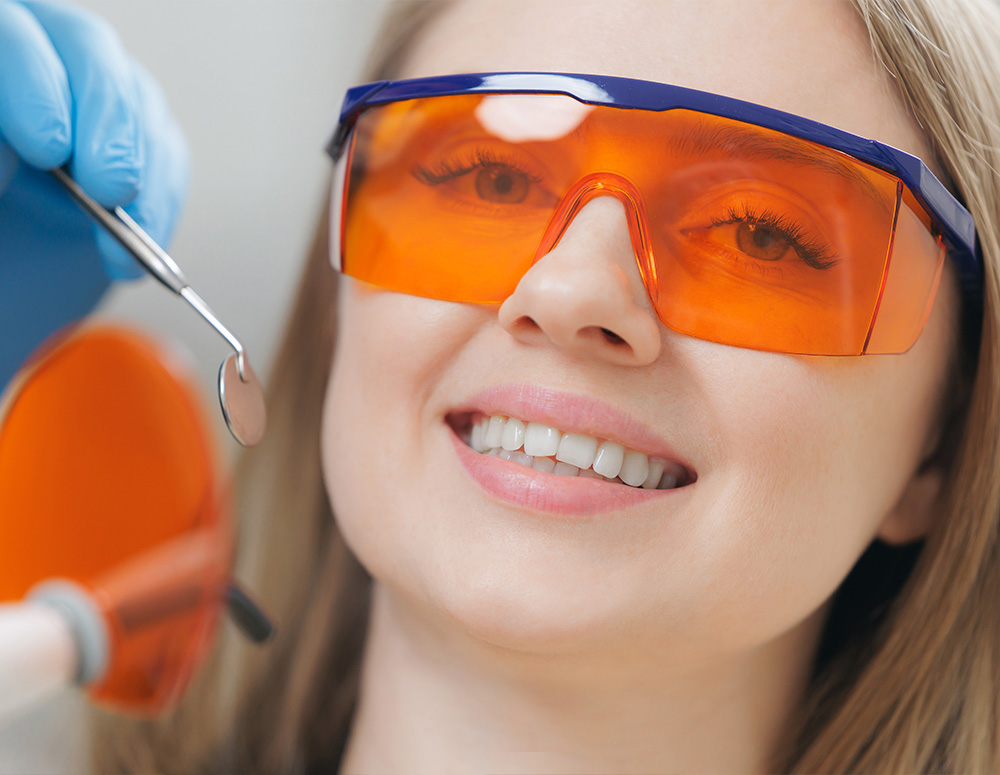
An in-office visit begins with a brief exam and cleaning to remove surface debris and confirm there are no contraindications. The gums are isolated and protected, and the whitening gel is applied in measured cycles; some systems repeat applications until the desired shade is approached. The total chair time typically ranges from one to two hours depending on the system and the degree of whitening sought.
Patients may experience transient sensitivity or mild gum irritation after treatment, which usually resolves within a few days and can be managed with desensitizing toothpaste and simple home care. The clinician will provide post-treatment instructions, such as avoiding strongly colored foods and beverages for the first 48 hours, and schedule a follow-up to assess results and determine if further treatment is advisable. If additional touch-ups are needed, the options will be discussed and coordinated with your oral-health status.
Take-home whitening involves custom-made trays that fit snugly over your teeth and hold a dentist-dispensed bleaching gel against the enamel for a prescribed period. Trays are typically worn nightly or for a specified number of minutes per day, and the concentration of the gel and wear schedule are tailored to the patient’s sensitivity and desired pace of whitening. Progress is monitored at follow-up visits so the clinician can adjust the protocol if necessary.
Because the trays are fabricated from impressions of your mouth, they help ensure even distribution of gel and reduce contact with the gums compared with generic store-bought trays. Take-home systems are convenient for gradual whitening and are commonly used for maintenance after an in-office procedure. Chadha & Co Dental provides instructions and supervision to help patients use these systems safely and effectively.
Bleaching agents lighten natural tooth structure but do not change the shade of restorative materials such as porcelain crowns, composite fillings, or veneers. If restorations are visible after whitening, they may appear darker relative to the newly lightened teeth, which can result in a mismatch. For that reason, restorative work is often coordinated with whitening so prosthetic materials can be matched to the final tooth shade.
Your dentist can recommend strategies such as whitening natural teeth before replacing or adjusting restorations, or using conservative cosmetic options to blend transitions between natural teeth and prosthetics. A treatment plan that considers both bleaching and restorative timing provides the most predictable aesthetic outcome. Discussing long-term goals during the initial consultation helps ensure restorations and whitening work together harmoniously.
Whitening longevity varies by individual and is influenced by diet, tobacco use, oral hygiene, and natural aging processes; results commonly last from several months to a few years. Foods and beverages that stain enamel, such as coffee, tea, red wine, and berries, accelerate relapse, while regular professional cleanings and diligent brushing and flossing help preserve results. Smoking substantially shortens the interval between necessary touch-ups.
Maintenance strategies include occasional at-home touch-ups with custom trays, periodic in-office touch-up treatments when indicated, and adopting habits that reduce staining. Your dental team will suggest a personalized maintenance schedule during routine checkups based on your habits and the stability of your shade. Consistent monitoring allows timely interventions that extend the life of your whitening investment.
The most common side effects are temporary tooth sensitivity and mild gum irritation, both of which usually resolve shortly after treatment. Overuse or improper application can increase these risks, which is why professional oversight is important to tailor concentration and wear time to each patient’s tolerance. Uneven results can occur when restorations are present, since prosthetic materials do not respond to bleaching.
Rare complications include prolonged sensitivity or gum discomfort that merits evaluation; the dental team will pause or modify treatment if necessary. Certain groups, such as pregnant or nursing patients, are generally advised to defer elective whitening until after pregnancy or lactation, and your clinician can help you determine appropriate timing. Supervised care minimizes risks and ensures any concerns are addressed promptly.
Some degree of transient sensitivity is common after whitening as peroxide temporarily increases fluid movement within the tooth’s microscopic tubules. This sensitivity typically peaks shortly after treatment and subsides within days to weeks, and it can be managed with desensitizing toothpaste, shorter application times, or lower-concentration gels. In-office options can also include brief desensitizing treatments before or after bleaching to reduce discomfort.
If sensitivity is pronounced or persistent, the clinician will adjust the protocol—pausing treatment, recommending intermittent use, or selecting alternative cosmetic approaches. Monitoring during follow-up visits ensures any adverse symptoms are addressed and that treatment proceeds in a way that balances results with comfort. Clear pre-treatment guidance helps patients anticipate and manage temporary sensitivity effectively.
The process begins with a comprehensive dental exam to evaluate oral health, detect cavities or gum disease, and identify the type and depth of staining. The clinician reviews your aesthetic goals, daily routine, and sensitivity history to recommend in-office whitening, a take-home regimen, or a combination of both. Diagnostic tools, shade assessment, and a discussion of expected outcomes help set realistic goals for treatment.
The office of Chadha & Co Dental will present the advantages and limitations of each option, outline post-treatment care, and coordinate whitening with any needed restorative work to ensure a uniform result. Follow-up appointments are scheduled to monitor progress and make adjustments as needed, which promotes safe, lasting outcomes. A tailored plan grounded in clinical findings and patient preferences provides the most predictable path to a brighter smile.
Ready to schedule your next dental appointment or have questions about our services?
Contacting Chadha & Co Dental is easy! Our friendly staff is available to assist you with scheduling appointments, answering inquiries about treatment options, and addressing any concerns you may have. Whether you prefer to give us a call, send us an email, or fill out our convenient online contact form, we're here to help. Don't wait to take the first step towards achieving the smile of your dreams – reach out to us today and discover the difference personalized dental care can make.


Back to top